



Short answer
Composite bonding is tooth-coloured resin glued onto a tooth and shaped by hand, usually in one visit. It has no fixed lifespan. Systematic reviews from 2015 and 2017 report yearly failure rates of up to about 4 to 5% for front teeth, so it often lasts several years before chips, stains or wear need repair.
Key takeaways
- Bonding is resin, not a new tooth. It is added to your tooth, set with a light and polished, usually in a single appointment.
- There is no set lifespan. Systematic reviews (Demarco and colleagues, 2015 and 2017) report yearly failure rates of roughly 0 to 5% for front tooth composite work, which is why it is described as lasting several years rather than a fixed number.
- Fracture is the most common reason it fails. Grinding, nail biting and chewing hard objects shorten its life; staining and colour change matter most when it was placed for looks.
- It can chip, stain and fall off, and colour matching is more limited than with porcelain. It does not whiten with the rest of your teeth.
- Little or no tooth is usually removed, which is why it is often the first option considered for small chips and gaps.
Jump to a section 10
- What is composite bonding?
- How long does composite bonding last?
- What shortens or extends the life of composite bonding
- What happens at a composite bonding appointment
- Composite bonding compared with porcelain veneers and whitening
- Risks and limitations of composite bonding
- How to look after composite bonding
- What changes the cost of composite bonding
- Getting composite bonding in Burwood
- Frequently asked questions
What is composite bonding?
Composite bonding, also called dental bonding or tooth bonding, is a way of adding tooth-coloured material to the surface of a tooth to change its shape or cover a flaw. The Victorian Government’s Better Health Channel describes resin composite as a tooth-coloured material that is glued (bonded) onto the tooth, placed directly, set immediately with a light and then polished smooth so your bite feels natural.
The material itself is the same family of composite resin used for white fillings. healthdirect explains on its dental fillings page that composite is matched to the colour of your other teeth and bonded to the tooth. What changes with cosmetic bonding is the purpose: instead of filling a hole left by decay, the dentist builds up and sculpts the resin to change how a tooth looks.
Because nothing is made in a laboratory, bonding is usually finished in one appointment. That is the main practical difference from porcelain veneers or crowns, which need a scan or mould and a second visit.
What composite bonding is commonly used for
Bonding suits small, specific changes rather than a whole new smile. Typical reasons people ask about it include:
- Chipped or slightly broken edges on front teeth.
- Small gaps between teeth that a person would like closed.
- Teeth that are a little short or oddly shaped compared with their neighbours.
- Surface defects or patches of discolouration that whitening will not shift.
- Worn edges, where the cause of the wear has been looked at first.
What composite bonding cannot do
Bonding changes the outside of a tooth. It does not straighten crooked teeth, correct a bite or treat decay or gum disease underneath. Better Health’s advice is to treat any disease first, because your health is the priority, and that is the order we follow too. If teeth are significantly out of line, clear aligners or braces may be the more honest answer, sometimes with bonding afterwards for the finishing touches.
How long does composite bonding last?
The short answer is several years, with a wide spread either side. Colgate’s Australian guide to bonding puts it simply: bonding usually lasts several years before it needs to be repaired, and how long depends on how much was done and on your habits. The clinical research explains why nobody can give you a single number.
Dentists measure the life of a restoration with the annual failure rate: the share of restorations that fail each year. A low yearly rate adds up over a decade, which is why the same material can look excellent at three years and need attention at ten.
What the research on composite longevity says
A 2015 systematic review in Dental Materials by Demarco and colleagues pooled 17 studies of front tooth composite restorations followed for at least three years. Across 1,821 restorations, annual failure rates ranged from 0 to 4.1%, and survival ranged from 53.4% to 100% depending on the study. Fracture of the tooth or the restoration was the most common reason for failure.
A later review by the same group, published in 2017, put annual failure rates for front teeth at 1% to 5%, and found that patient factors such as decay risk and heavy biting forces had a significant effect on survival.
For composite veneers, where resin covers the whole front surface, a 2023 meta-analysis by Lim and colleagues found a pooled survival of 88% in randomised trials with mean follow-up of 24 to 97 months. Surface roughness, colour mismatch and staining at the edges were the problems reported most often.
Reading those figures fairly
These are averages from research groups, across many patients and dentists. They describe the material, not what will happen in your mouth, and individual results vary. Your bite, habits and the size of the bonding matter more than any average.
Failure usually means repair, not starting again
When bonding chips or stains, it can often be polished, patched or rebuilt rather than removed completely. Lim’s 2023 analysis noted that many of the problems it recorded were clinically acceptable with or without a touch-up. That is part of why composite is used for small changes: it is relatively simple to maintain.
What shortens or extends the life of composite bonding
Some of what decides how long bonding lasts is outside your control, such as where it sits and how much of the tooth it covers. Much of it is not. The table below brings together the factors the sources above describe.
| Factor | Why it matters | What helps |
|---|---|---|
| Grinding and clenching | Heavy biting forces were linked to lower survival in Demarco’s 2017 paper, and fracture is the most common failure | Tell your dentist if you grind; ask whether a night splint is worth considering |
| Biting nails, ice or pens | Colgate notes composite is not nearly as strong as natural tooth and these habits can chip it | Use your hands or scissors, not your front teeth |
| Tea, coffee and smoking | Resin can pick up stain, especially at the edges | Brush regularly and avoid strong staining drinks for the first 48 hours |
| Size and position of the bonding | Smaller restorations between front teeth generally had lower failure rates than larger ones in Demarco’s 2015 analysis | Keep the plan as conservative as the result allows |
| Decay risk and gum health | New decay at the edges undermines the bond | Regular check-ups and cleans, and treating problems first |
Why grinding is the factor to mention at your consultation
If you wake with a sore jaw, or someone has told you that you grind at night, say so before any bonding is planned. healthdirect’s veneers page notes that veneers may not be suitable for people who grind or clench, and the same forces work on bonding. It does not always rule bonding out, but it changes how it is planned and how it is protected.
What happens at a composite bonding appointment
Bonding is usually done in a single visit. Colgate’s guide says it typically takes about 30 minutes to an hour, and that more than one visit may be needed when several teeth are involved. Anaesthetic is often not needed unless the bonding is also filling a decayed tooth. The steps below are the general sequence.
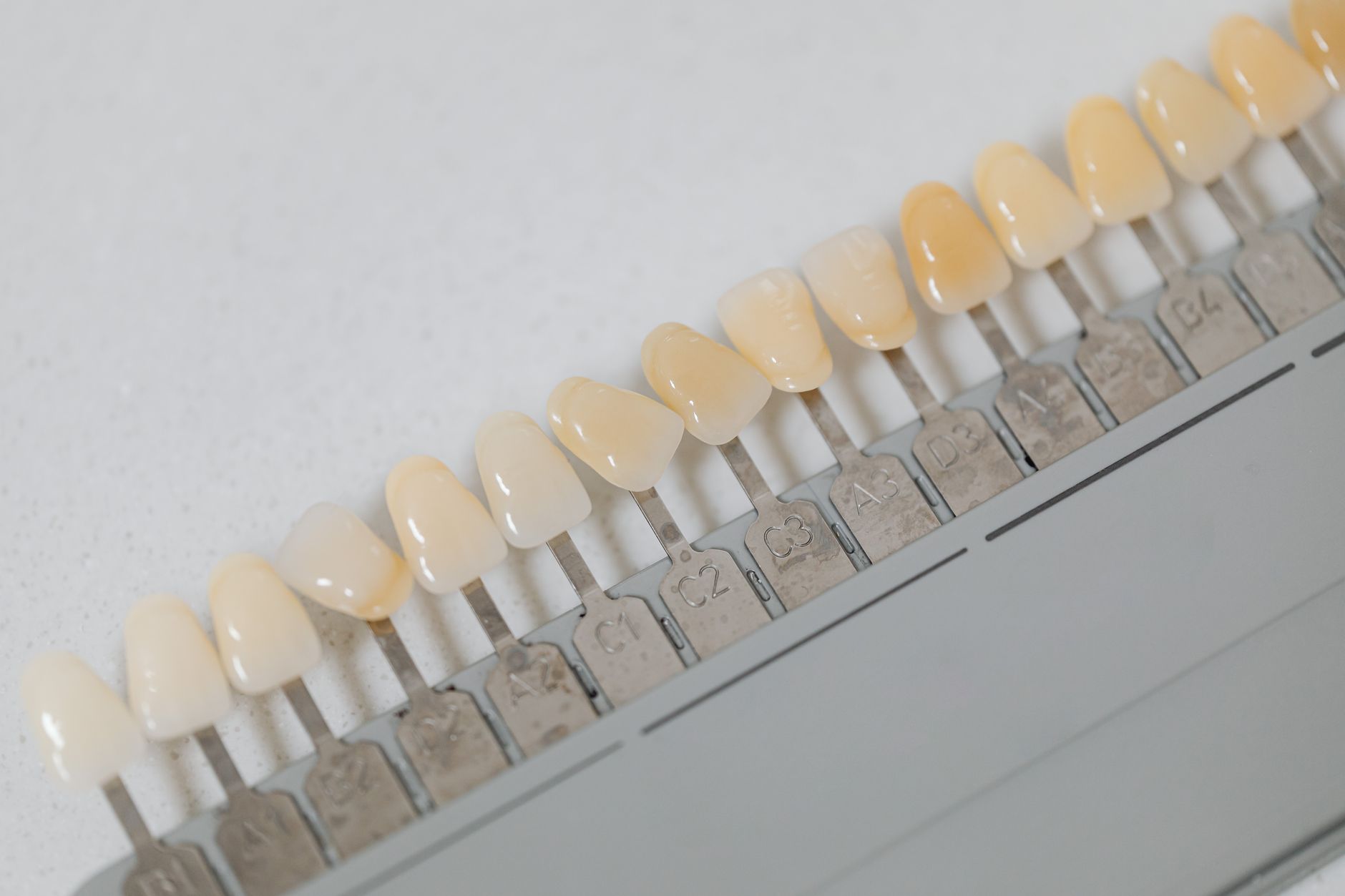
- Assessment first. The dentist checks the teeth and gums, looks at your bite and talks through what you want to change and whether bonding suits it.
- Shade selection. A shade guide is used to choose the resin colour closest to your tooth. If you are thinking of whitening, it should be done before this step, because the resin will not lighten afterwards.
- Surface preparation. The tooth surface is cleaned and conditioned so the resin can bond. Usually little or no tooth is removed, though a small amount sometimes is.
- Building and shaping. The resin is applied in layers, shaped by hand and set with a curing light.
- Polishing and bite check. The surface is polished smooth and your bite is checked so nothing catches when you close.
Whitening comes first
Better Health is clear that fillings, crowns, veneers and some types of discolouration do not whiten. If you want lighter teeth as well as bonding, whiten first and match the bonding to the new shade.
Wondering if bonding suits your teeth?
Book a consultation in Burwood. We will check your teeth and bite, explain whether bonding, veneers, whitening or nothing at all makes sense, and put the plan and fee in writing before you decide.
Composite bonding compared with porcelain veneers and whitening
Bonding is one of several ways to change how front teeth look. The right choice depends on what you are trying to fix, how much tooth you are willing to have altered, and how long you want the result to last before maintenance. healthdirect notes that porcelain veneers can look more realistic and last longer than resin veneers, but cost more.
| Composite bonding | Porcelain veneers | Teeth whitening | |
|---|---|---|---|
| What it is | Resin added to the tooth and shaped by hand | Thin ceramic shells made in a laboratory and glued on | A bleaching treatment that lightens natural teeth |
| Visits | Usually one | Usually two | One or more, or at home with trays |
| Tooth removed | Usually little or none | A thin layer is often removed, which may be irreversible | None |
| Changes shape | Yes, small changes | Yes | No, colour only |
| Main downsides | Chips, stains, limited colour match | Can crack or come off; sensitivity; colour cannot be changed later | Colour only; does not lighten fillings, crowns, veneers or bonding |
When composite bonding is usually considered first
Because it keeps more of the natural tooth and can be repaired, bonding is often considered first for a single chip, a small gap or one tooth that is shorter than the rest. If the changes are larger, or if you want a result that resists staining better, porcelain veneers may be worth discussing, with their own risks weighed honestly.
When teeth whitening may be enough
If the only thing bothering you is colour, and your teeth are otherwise sound and well shaped, teeth whitening changes colour without adding anything to the tooth. It does not change existing fillings, crowns or bonding, so it is worth knowing what is already in your mouth first.
Risks and limitations of composite bonding
Bonding is a conservative treatment, but it is not without downsides. The sources cited in this article describe these material risks and limitations:
- Chipping or coming off. Better Health notes resin composite can chip or fall out and need replacing.
- Staining and colour change. Resin can stain, particularly at the edges, and healthdirect notes fillings can change colour over time.
- Limited colour match. Better Health says colour options are more limited, so a good match can be harder to get than with ceramic.
- Short-term sensitivity. healthdirect notes a tooth can be sensitive for a short time after composite work; see your dentist if it lasts more than a few days.
- Bite changes. Added material can change how teeth meet. Tell your dentist if your bite feels off or an edge feels sharp.
- Ongoing maintenance. Bonding will need polishing, repair or replacement at some point. It is not a one-off cost.
Results vary, and alternatives exist
How bonding looks and how long it lasts varies from person to person. Alternatives include porcelain veneers, crowns, whitening, orthodontic treatment, or leaving the tooth as it is. Whether bonding suits you depends on a clinical assessment, and you are welcome to seek a second opinion before going ahead.
How to look after composite bonding
Looking after bonding is mostly ordinary good dental care, with a few habits to watch. None of these needs special products.

- Brush twice a day and clean between your teeth, paying attention to the edges of the bonding where stain and plaque collect.
- Keep up regular check-ups and professional cleans, so small chips or rough edges can be polished before they grow.
- Go easy on stain for the first 48 hours, and keep up regular brushing afterwards, because tea, coffee and smoking can stain resin.
- Do not use your front teeth as tools. No nail biting, opening packets, or chewing ice and pens.
- Call your dentist if a piece chips off, an edge feels sharp, or your bite suddenly feels different.
What changes the cost of composite bonding
We do not publish a figure for bonding in a general article, because the fee depends on what your teeth need and any number here would be wrong for most readers. What moves it is easy to explain:
- How many teeth are being bonded, and how much of each tooth is covered.
- Whether it is a small repair or a full composite veneer over the whole front surface.
- Any treatment needed first, such as a check-up, clean, decay or gum treatment.
- Whether you whiten first, so the bonding can be matched to the lighter shade.
- Maintenance over time, since polishing and repairs are part of the life of bonding.
Health funds and paying over time
If you have extras cover, ask your fund what it pays towards your treatment, using the item numbers from your written plan, before you book. We also offer payment plans; compare the total amount payable, not only the instalment.
Getting composite bonding in Burwood
If you are weighing up composite bonding or composite veneers, the useful first step is an assessment, not a decision. As a Burwood dentist on Burwood Road, we look at your teeth, gums and bite, talk through what you would like to change, and explain whether bonding, another option or no treatment at all makes sense.
It is also worth knowing how titles work. Better Health points out that cosmetic dentistry is not a recognised specialty in Australia. Our dentists hold general registration with the Dental Board of Australia, and composite bonding is general dental work. You will get a written plan and fee before anything starts, and you are free to take it away and think about it.
Frequently asked questions
How long does composite bonding last?
There is no fixed lifespan. Systematic reviews of front tooth composite work published in 2015 and 2017 report yearly failure rates of roughly 0 to 5%, so bonding commonly lasts several years before it needs repair or replacement. Grinding, nail biting, staining habits and the size of the bonding all affect how long yours lasts.
Does composite bonding damage your teeth?
Usually little or no tooth is removed for bonding, which is one reason it is considered conservative. A small amount of surface is sometimes adjusted. The tooth underneath still needs good care, because decay can start at the edges of any restoration.
Can composite bonding be whitened?
No. Whitening gel does not lighten composite resin, fillings, crowns or veneers. If you want whiter teeth as well as bonding, whitening is done first and the bonding is matched to the new shade.
Does composite bonding stain?
It can. Tea, coffee, red wine and smoking can stain resin, especially at the edges. Regular brushing, professional cleans and occasional polishing help, and avoiding strong staining drinks for the first 48 hours is sensible.
Is composite bonding the same as composite veneers?
They use the same material. Bonding usually means adding resin to part of a tooth, such as a chipped edge or a gap. A composite veneer covers the whole front surface of the tooth. Both are usually done in one visit.
Does composite bonding hurt?
Anaesthetic is often not needed for cosmetic bonding because little or no tooth is removed, though it may be used if decay is being treated at the same time. Some people notice short-term sensitivity afterwards. Tell your dentist if it lasts more than a few days.
In short
Composite bonding is tooth-coloured resin added to a tooth and shaped by hand, usually in one visit. It commonly lasts several years, with systematic reviews from 2015 and 2017 reporting yearly failure rates of up to about 4 to 5% for front teeth, and it needs maintenance along the way.
- It suits small changes: chips, gaps and small shape or surface flaws.
- Grinding, nail biting and hard objects are the habits that shorten its life.
- It can chip, stain and come off, and it does not whiten.
- Whiten first if you want lighter teeth, then match the bonding.
- Ask for a written plan and fee after an assessment, and compare options.
Find out whether composite bonding suits your teeth
Book a consultation at our Burwood practice. We will examine your teeth, explain your options, including whether you need treatment at all, and give you a written plan and fee before you commit to anything.
Book a consultation Call (02) 9739 1400
Shop 2, 8 Burwood Road, Burwood NSW 2134
Sources
- Cosmetic dentistry and teeth whitening (reviewed 12 December 2025), Better Health Channel, Department of Health, Victoria
- Dental fillings, healthdirect Australia
- Veneers, healthdirect Australia
- What is teeth bonding?, Colgate Australia
- Demarco FF et al. Anterior composite restorations: a systematic review on long-term survival and reasons for failure. Dent Mater. 2015;31(10):1214-24, PubMed
- Demarco FF et al. Should my composite restorations last forever? Why are they failing? Braz Oral Res. 2017;31(suppl 1):e56, PubMed
- Lim TW et al. Survival and complication rates of resin composite laminate veneers: a systematic review and meta-analysis. J Evid Based Dent Pract. 2023;23(4):101911, PubMed
This article is general information only and is not a substitute for individual advice from a registered dental practitioner. Individual results vary, and whether a treatment suits you depends on a clinical assessment of your teeth, gums and bite. If you are considering treatment, you are welcome to seek a second opinion. The Dental Practice is a dental practice in Burwood, NSW; our practitioners are registered with the Dental Board of Australia through AHPRA.